Why Precast/Readymade Walls Are Replacing Traditional Brick Walls
Here's why the shift is happening, and what it means for your next project.

Why Precast/Readymade Walls Are Replacing Traditional Brick Walls
Category: Industry Insight
Read time: 6 min
Tags: Readymade Walls, Precast Construction, Building Materials
Walk past any large construction site in India today and you'll notice something different — fewer masons laying bricks row by row, and more crews simply lifting pre-made wall panels into position. Precast and readymade walls are no longer a niche choice. They're fast becoming the default for contractors who care about speed, consistency, and cost control.
Here's why the shift is happening, and what it means for your next project.
What are precast / readymade walls?
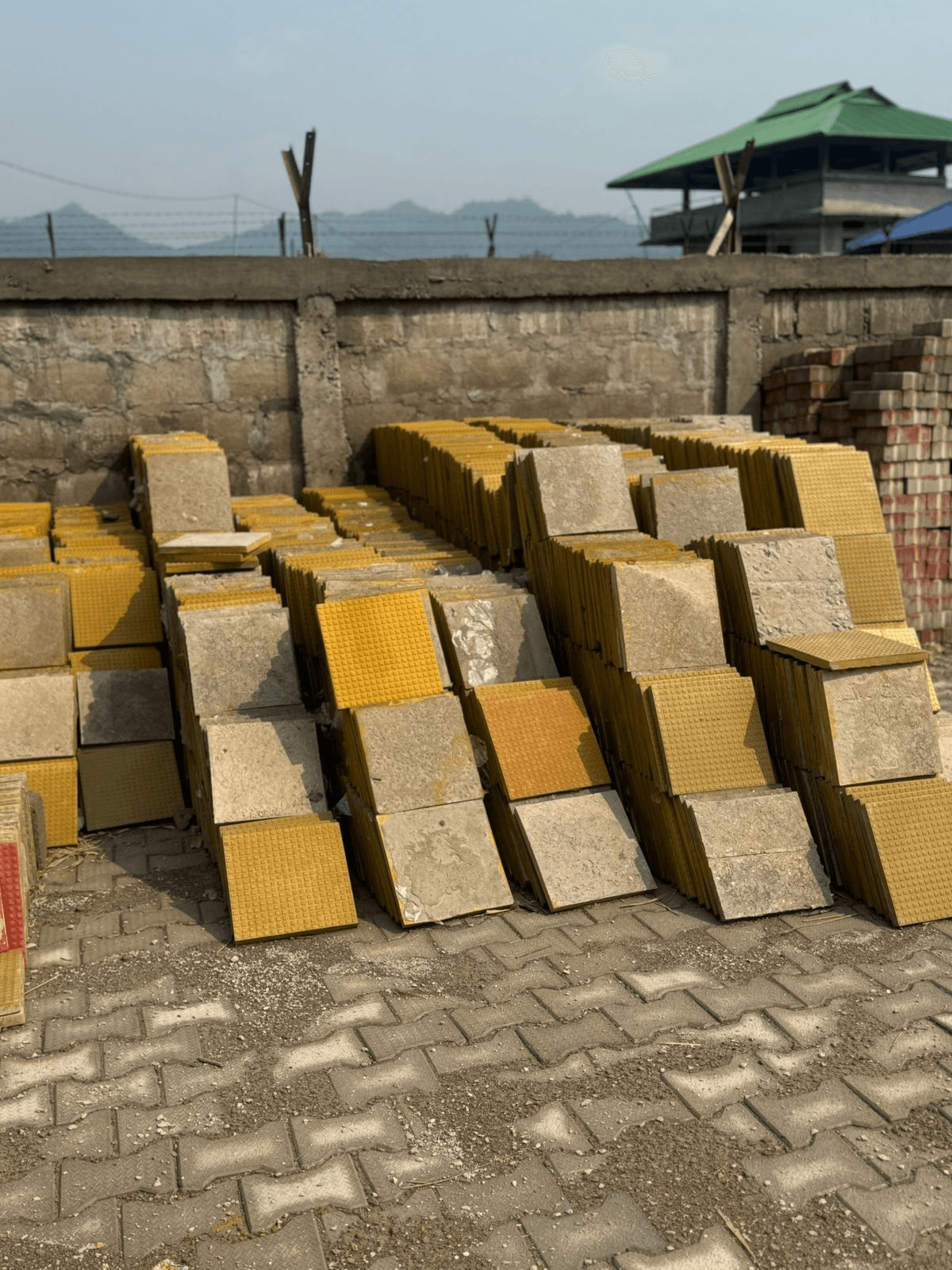
Precast walls are concrete wall panels manufactured in a controlled factory environment, then transported to site and installed directly. Unlike traditional brick walls that are built brick by brick on-site, a readymade wall arrives as a finished structural unit — cast, cured, and quality-tested before it ever reaches your project.
They come in several forms:
- Solid precast panels — full concrete sections used for boundary walls, compound walls, and security perimeters
- Hollow-core panels — lighter weight with voids inside, good for non-load-bearing partitions
- Reinforced precast walls — steel-reinforced for higher structural loads and taller spans
- Decorative precast panels — textured or patterned finishes for visible facades and landscaping
The core problem with traditional brick walls
Brick walls have served construction well for centuries. But on modern projects — where timelines are tight, labour is expensive, and quality must be consistent — the traditional method creates real problems.
Time: A skilled mason lays roughly 300–500 bricks per day. A 100-metre boundary wall at standard height can take a team of workers several weeks to complete, plus additional time for curing mortar and plastering.
Labour dependency: Every stage — mixing mortar, laying courses, curing, finishing — depends on skilled on-site labour. When workers are unavailable or inconsistent, the whole project slows down.
Quality variation: No two sections of a hand-built brick wall are identical. Mortar ratios, joint thickness, plumb accuracy, and curing conditions all vary across a workday, across workers, and across weather conditions.
Weather sensitivity: Mortar requires specific temperature and humidity conditions to cure properly. Rain, extreme heat, or cold can delay work or compromise finished quality.
Long-term maintenance: Brick walls are prone to efflorescence (white salt deposits), mortar joint erosion, and water ingress over time — all of which require periodic repair.
Why precast walls solve these problems
Speed of installation
This is the most immediately visible advantage. A precast wall panel that would take a crew days to build on-site can be craned and fixed in position in hours. Projects that once required 3–4 weeks of wall construction can be completed in days with the right precast supply and a small installation team.
For developers managing tight handover timelines, or contractors juggling multiple sites, this speed advantage compounds quickly.
Consistent, factory-controlled quality
Every precast panel is produced under controlled conditions — precise mix ratios, standardised reinforcement placement, vibration compaction, and controlled curing. The result is a wall with predictable, uniform strength throughout, not dependent on the skill or energy level of an on-site team on any given day.
At our factory, every batch is tested for compressive strength, dimensional accuracy, and surface finish before it leaves the plant. What arrives on your site is what was specified — no surprises.
Reduced on-site labour
Installing precast walls requires a much smaller on-site crew than traditional brickwork. You need equipment operators and a small fixing team rather than multiple skilled masons working in sequence. This directly reduces your wage bill and your exposure to labour availability issues.
Lower long-term maintenance
Precast concrete walls are denser and less porous than brick-and-mortar construction. They resist water absorption, don't suffer from mortar joint erosion, and are significantly less prone to cracking over time. The upfront cost is offset by a substantially lower maintenance burden over the wall's lifespan.
Structural reliability for larger projects
For compound walls, industrial perimeters, and infrastructure boundaries, precast panels can be engineered to specific load and height requirements with reinforcement built in. Achieving the same structural performance with traditional brick requires significantly more time and specialist masonry skill.
Where readymade walls are used most
Residential compounds and boundary walls — The most common application. Precast compound walls can be installed in a fraction of the time it takes to build traditional boundary walls, with a clean finished appearance on both sides.
Industrial and warehouse facilities — Large perimeter walls for factories, warehouses, and logistics yards are an ideal fit for precast panels. Speed and uniformity matter more than custom aesthetics here.
Infrastructure and road projects — Noise barriers, retaining walls, and channel walls along highways and rail corridors are increasingly precast because of the volume and pace of installation required.
Residential plotted developments — Builders developing large layouts install compound walls as one of the first steps. Precast allows them to secure and define plots quickly while the rest of the project progresses.
Honest limitations to consider
Precast walls aren't the right choice for every application. A few things worth knowing:
- Curved layouts are harder to achieve with standard panels. Custom-curved precast is possible but adds cost and lead time.
- Transport logistics matter. Panels are heavy and require appropriate vehicles and crane access on site. Remote or narrow-access sites can complicate delivery.
- Design flexibility is lower than brickwork for highly custom architectural finishes, though textured and patterned panels cover most common requirements.
For straightforward boundary walls, perimeter fencing, and compound walls — which represent the majority of wall construction — none of these limitations are significant.
Cost: is precast actually cheaper?
The material cost per square metre of precast wall is often comparable to or slightly higher than equivalent brickwork on paper. But material cost is only part of the picture.
When you factor in:
- Reduced labour hours and wages
- Shorter project timeline (and the carrying costs that come with it)
- Lower wastage (no broken bricks, no excess mortar)
- Minimal finishing work required
- Lower maintenance over 10–20 years
...precast walls consistently deliver better total value, especially on medium to large projects. The larger the wall area, the more the economics tilt in favour of precast.
What to look for in a precast wall supplier
Not all precast panels are equal. Before placing an order, ask your supplier:
- What compressive strength grade are the panels made to? — Look for M25 or higher for standard boundary walls.
- Are panels reinforced? — Essential for walls above 1.5m in height or in areas with wind or soil pressure loads.
- What are the standard panel dimensions? — Understand how panels join and whether they suit your site layout.
- Is quality testing documented? — A credible manufacturer will provide batch test certificates.
- What is the lead time and delivery radius? — Confirm logistics before committing, especially for large volumes.
The bottom line
Traditional brick walls built by skilled masons will always have a place in construction. But for the vast majority of boundary, compound, and perimeter wall applications, precast and readymade walls offer a clear advantage in speed, quality consistency, labour efficiency, and long-term durability.
The shift isn't just a trend — it's a practical response to how construction economics have changed. Labour costs are rising, project timelines are compressing, and clients expect reliable, consistent results. Precast walls deliver all three.
Planning a wall project?
Whether it's a residential compound, an industrial boundary, or a large development perimeter, our team can advise on the right precast specification for your site.